


1. 2.3x* Larger Build Volume
*Data sourced from HeyGears Lab. The build volume of the Reflex 2 Pro is 2.3 times that of the Reflex.

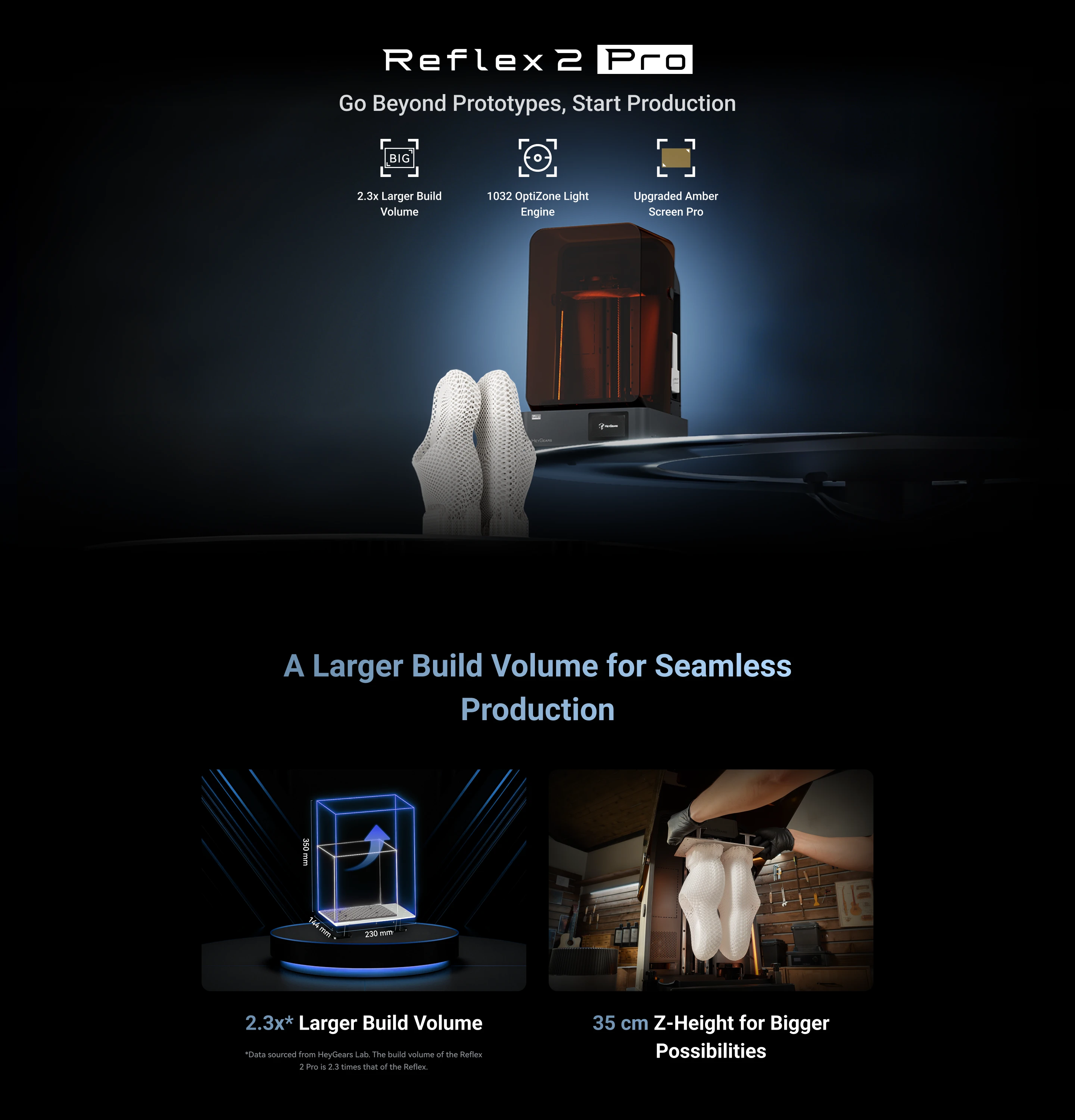
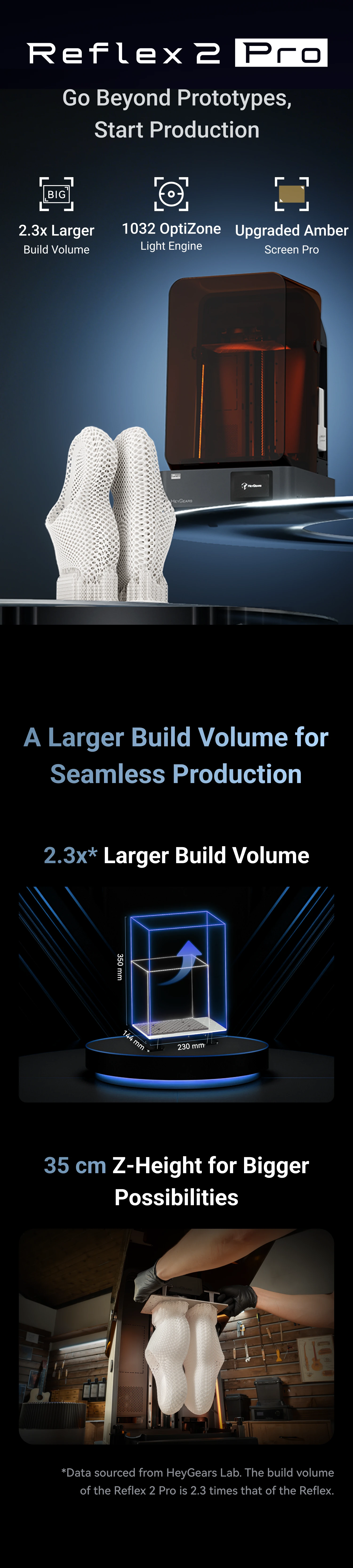
*Data sourced from HeyGears Lab. The build volume of the Reflex 2 Pro is 2.3 times that of the Reflex.
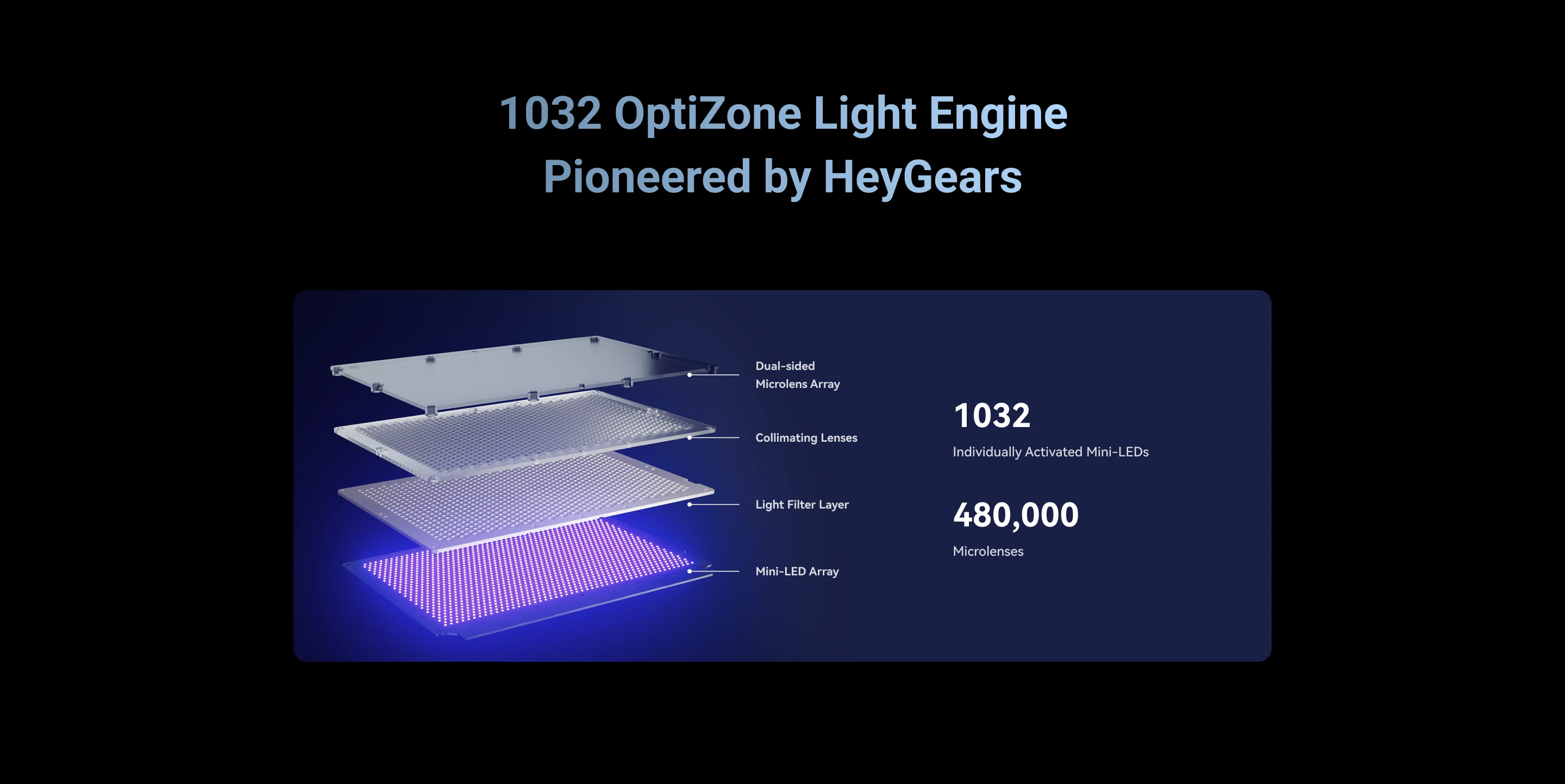
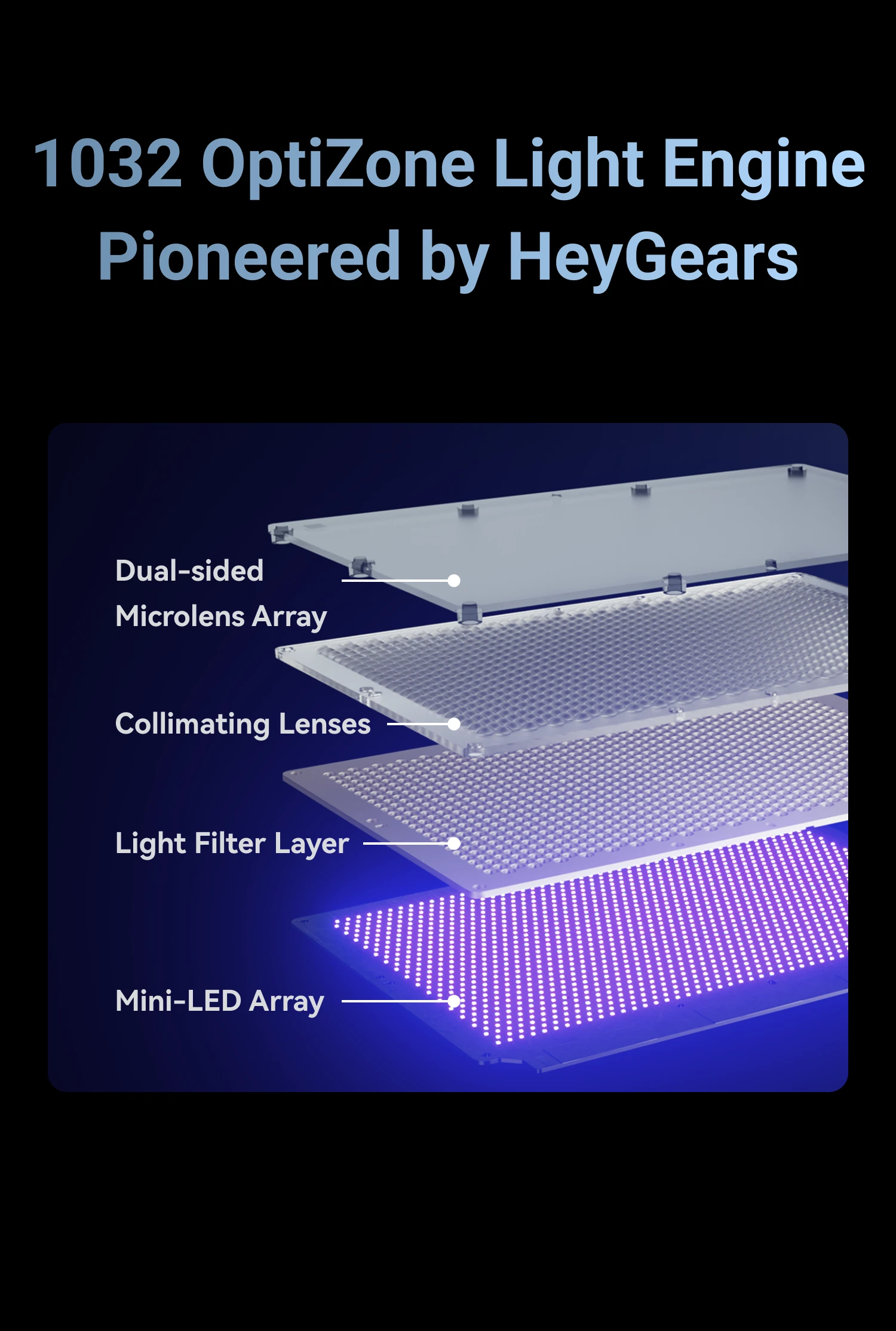
With 1032 individually controlled light zones, the Reflex 2 Pro enables precise light projection within the printing area. This pinpoint accuracy ensures a flawless surface through optimal curing, while reducing resin residue to lower tank filtration frequency and improve production efficiency.
The OptiZone Light Engine features 1032 custom collimating lenses as well as a dual-sided microlens array consisting of 480,000 microlenses for highly collimated and uniformed light.
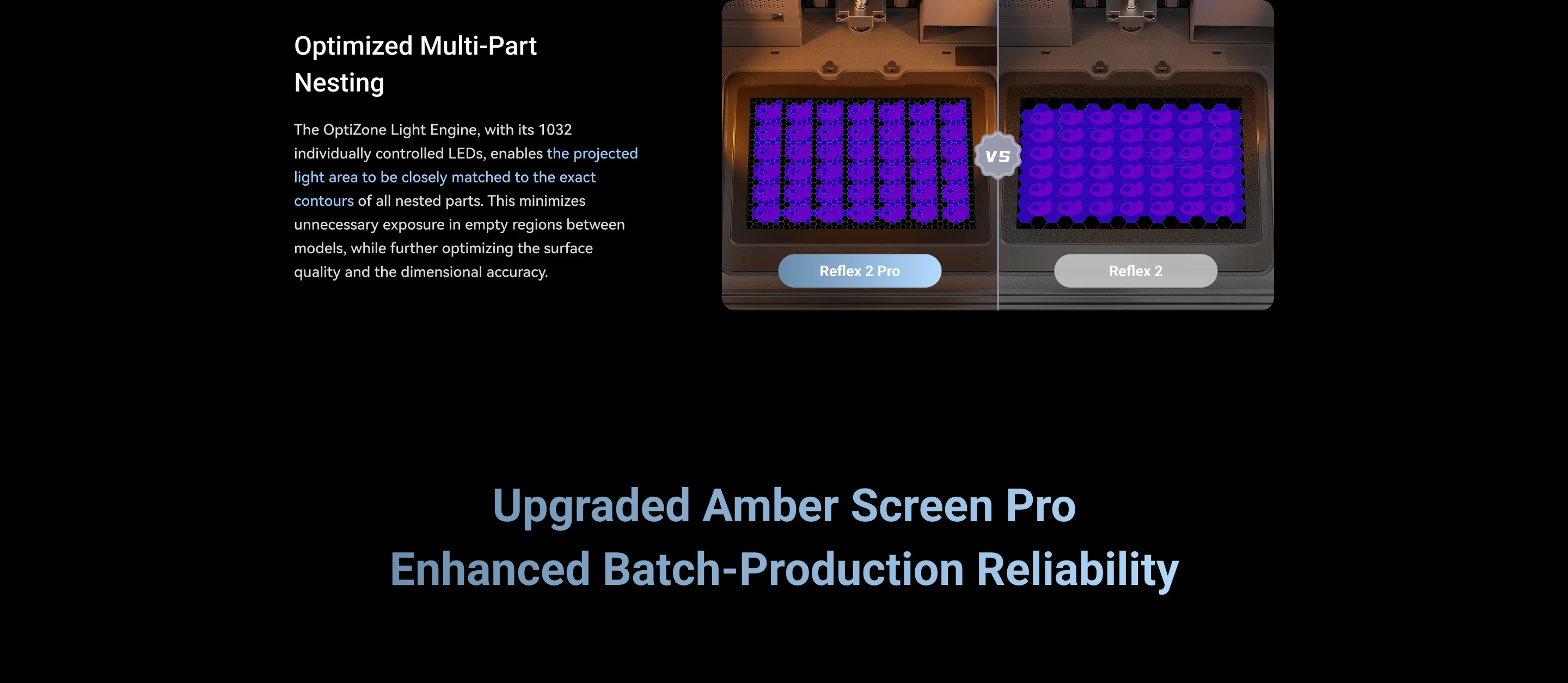
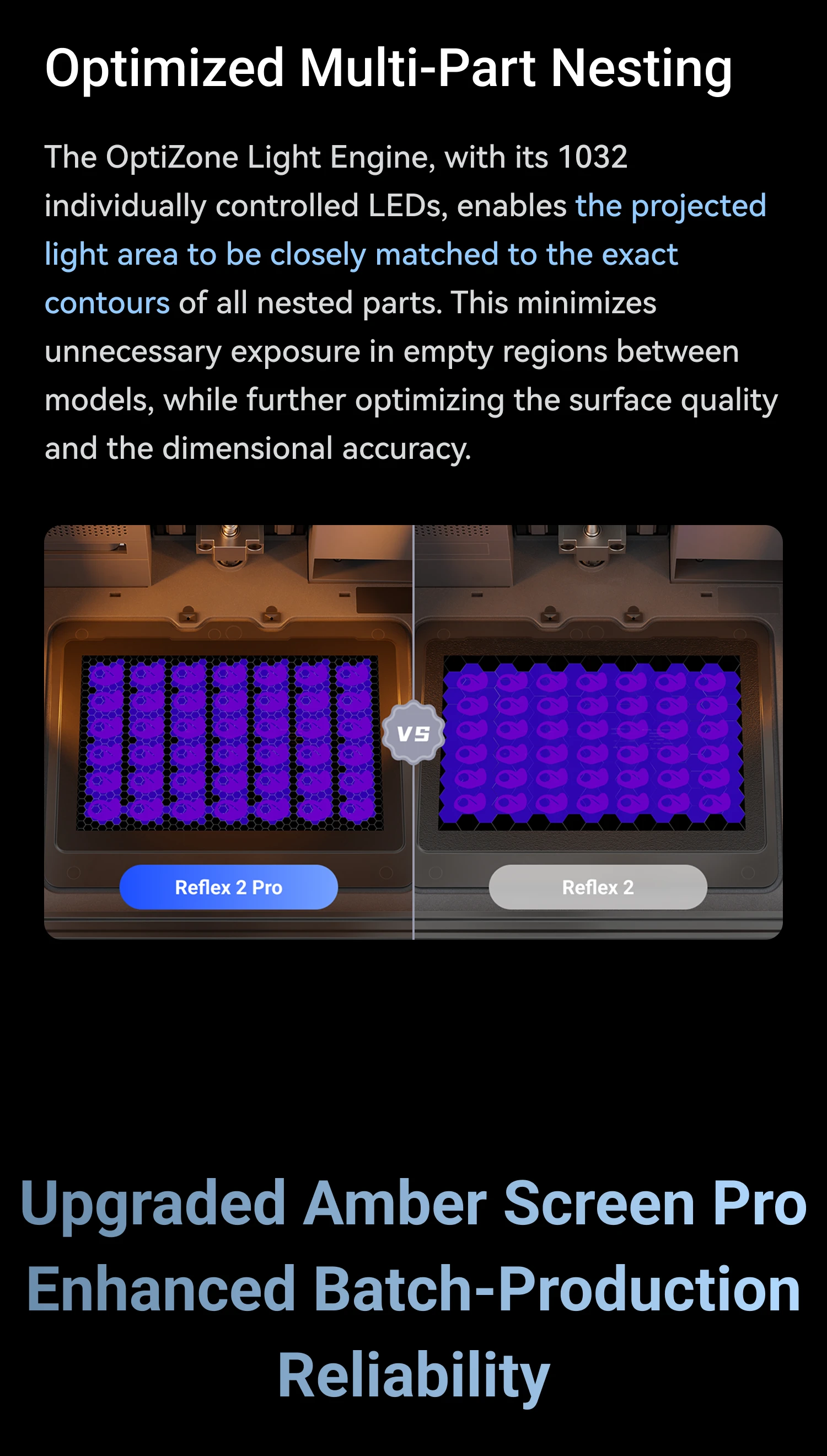
The OptiZone Light Engine, with its 1032 individually controlled LEDs, enables the projected light area to be closely matched to the exact contours of all nested parts. This minimizes unnecessary exposure in empty regions between models, further optimizes the surface quality and the dimensional accuracy.
With its high 10% energy transmission rate, double that of conventional LCD printers, the Amber Screen Pro supports a light intensity of up to 35 W/m² for curing, which effectively reduces the exposure time for each layer and opens more possibilities of higher performance resins.
*Data sourced from HeyGears Lab, compared to conventional LCD screens with a 5% transmission rate.
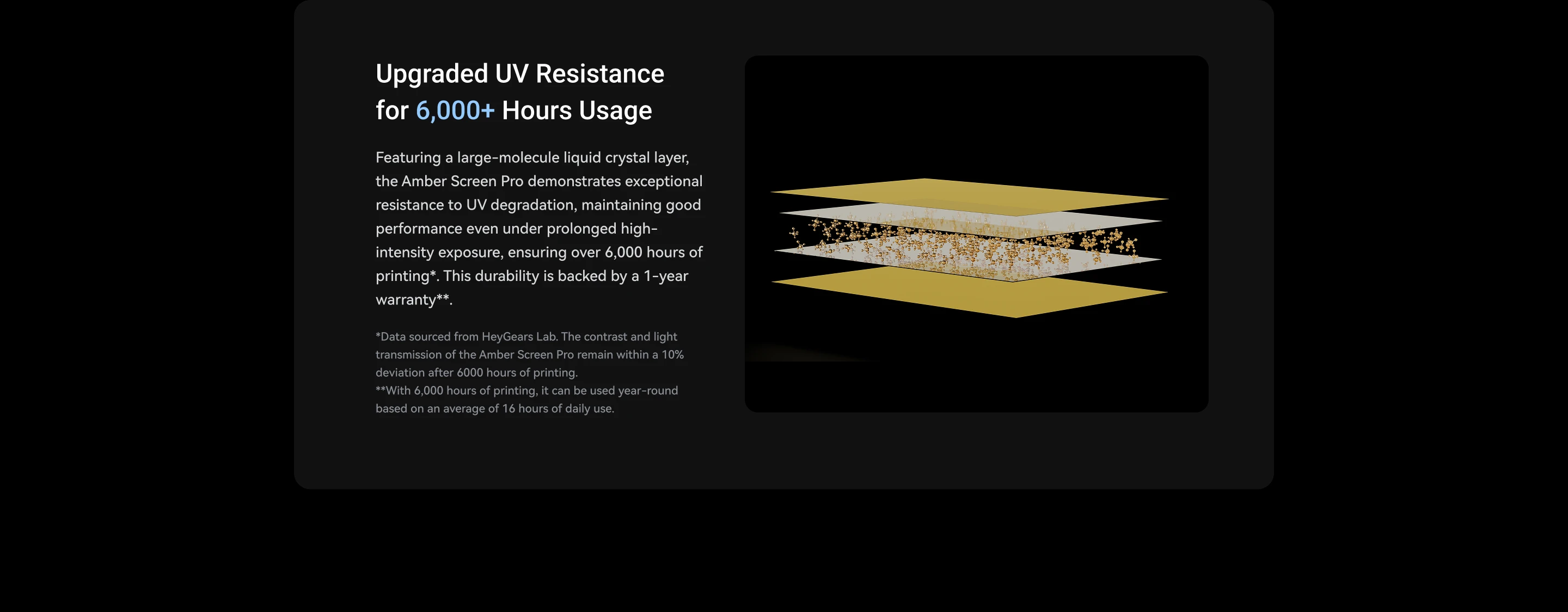
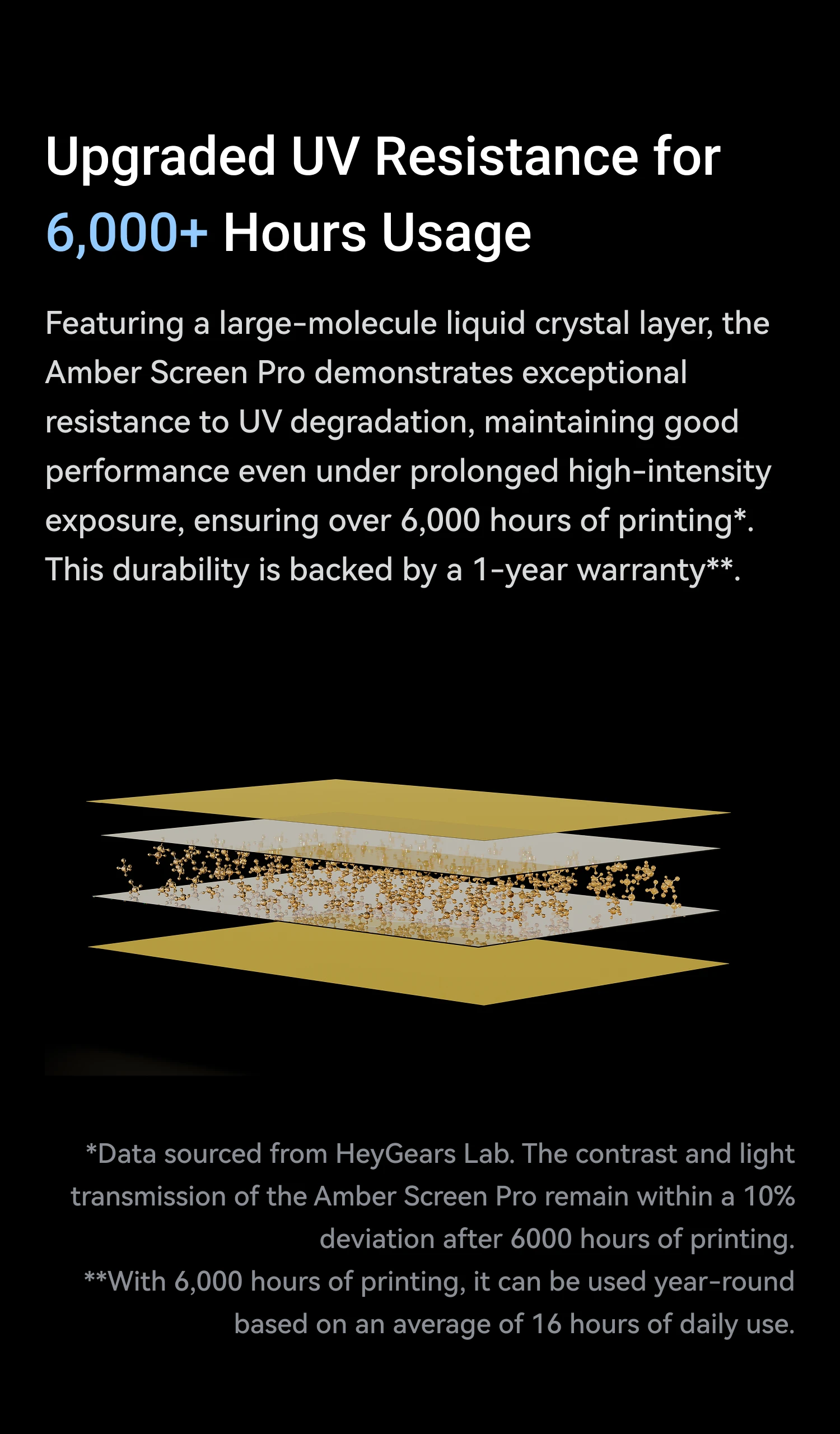
Featuring a macro molecular liquid crystal layer, the Amber Screen Pro demonstrates exceptional resistance to UV degradation, maintaining good performance even under prolonged high-intensity exposure, ensuring over 6,000 hours of printing*. This durability is backed by a 1-year warranty**.
*Data sourced from HeyGears Lab. The contrast and light transmission of the Amber Screen Pro remain within a 10% deviation after 6000 hours of printing.
**With 6,000 hours of printing, it can be used year-round based on an average of 16 hours of daily use.
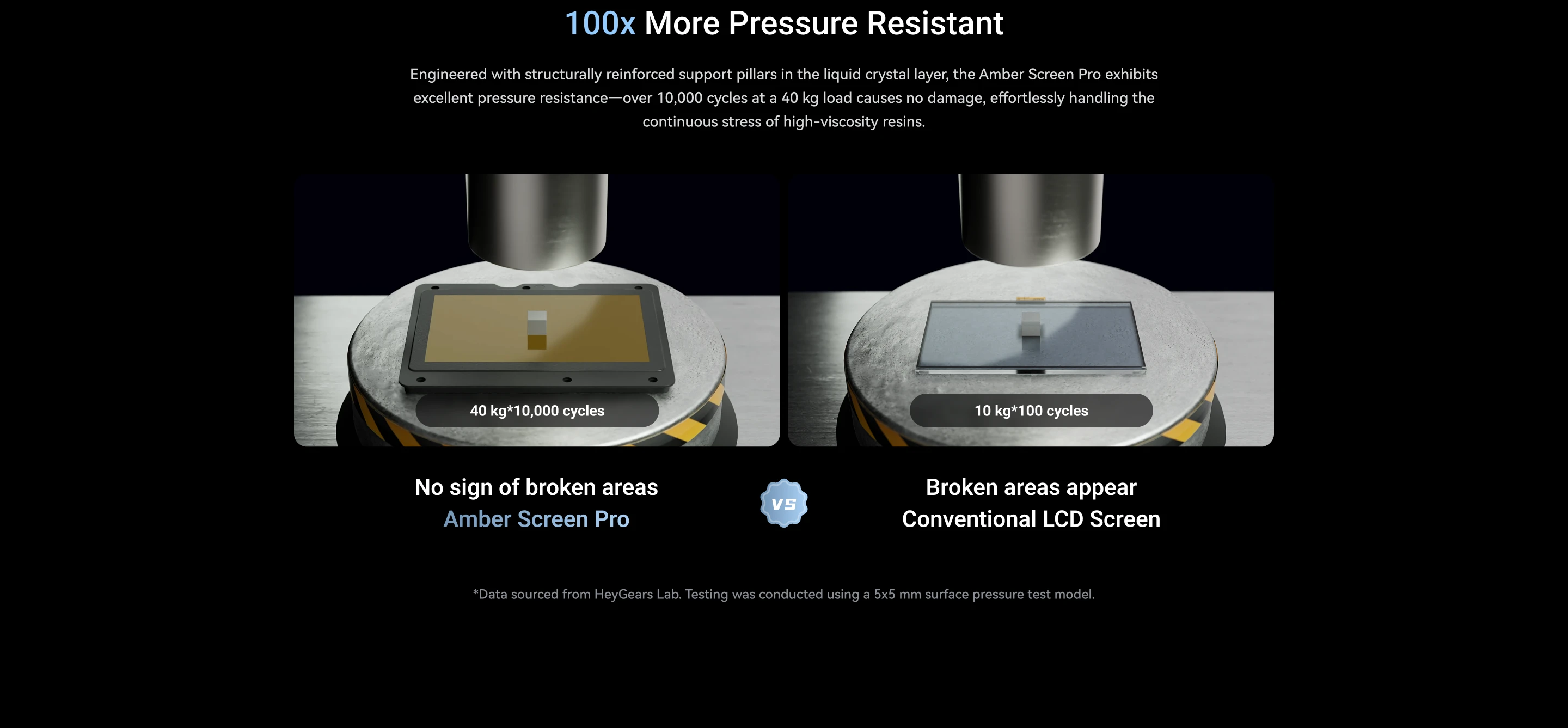
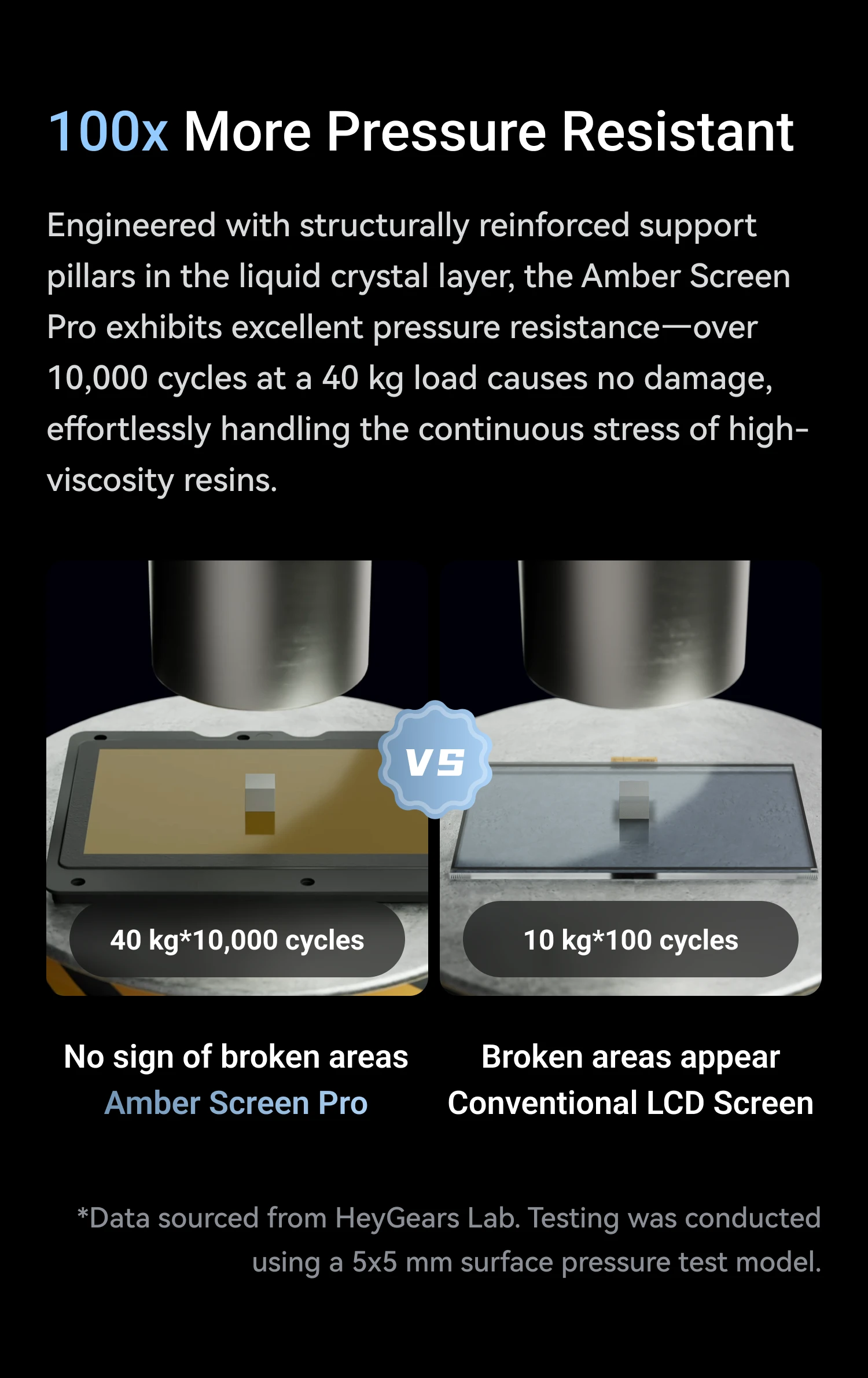
Engineered with structurally reinforced support pillars in the liquid crystal layer, the Amber Screen Pro exhibits excellent pressure resistance—over 10,000 cycles at a 40 kg load causes no damage, effortlessly handling the continuous stress of high-viscosity resins.
*Data sourced from HeyGears Lab. Testing was conducted using a 5x5 mm surface pressure test model.
The upgraded visual calibration algorithm, MASK, uses 86,020 calibration zones to compensate for light intensity variations in each screen zone. This method achieves ≥94% light uniformity and print accuracy of ≤0.05 mm*.
*Data from HeyGears Lab: Indicating the dimensional deviation for a printed test model measuring equal to or less than 20 mm in the XY direction. Test results are within the 95% confidence interval.
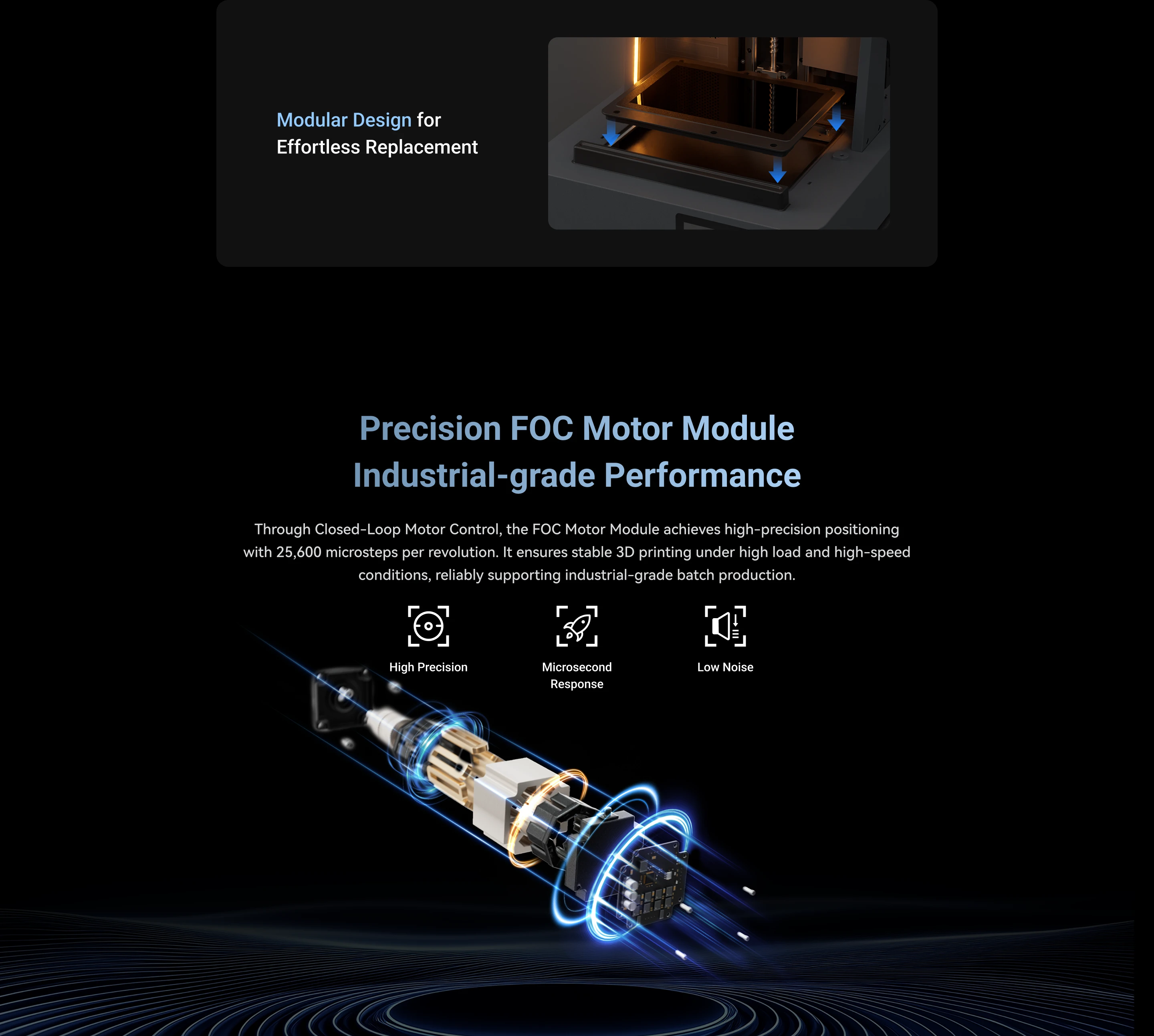
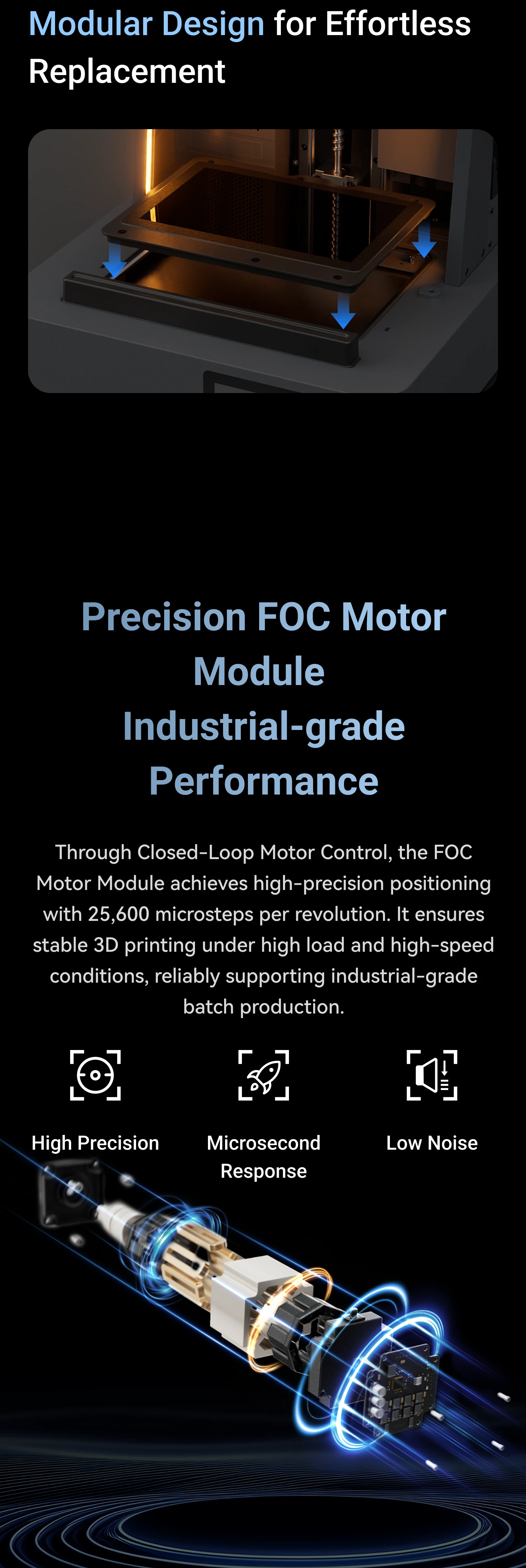
Through Closed-Loop Motor Control, the FOC Motor Module achieves high-precision positioning with 25,600 microsteps per revolution. It ensures stable 3D printing under high load and high-speed conditions, reliably supporting industrial-grade batch production.
High Precision | Microsecond Response | Low Noise
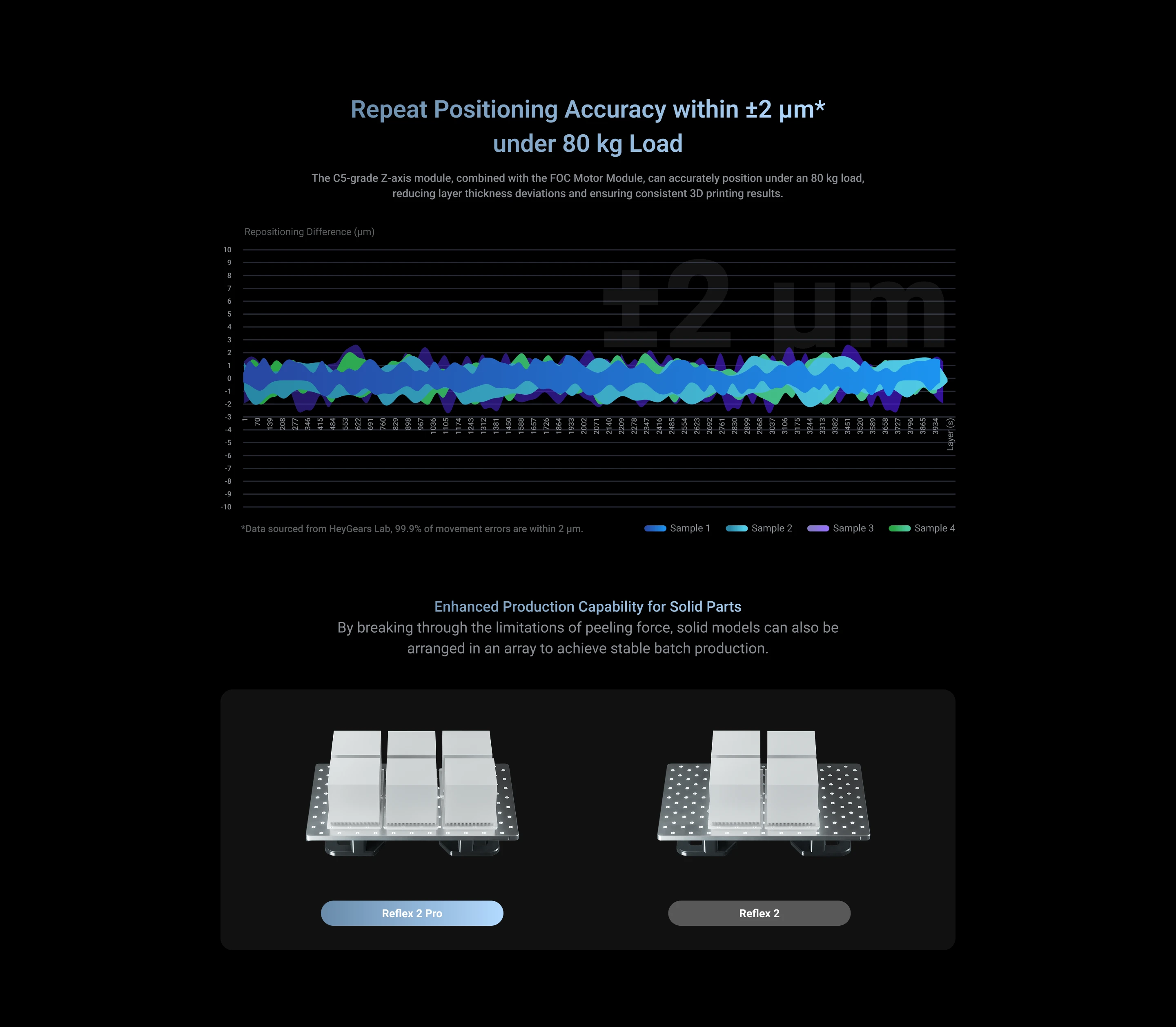
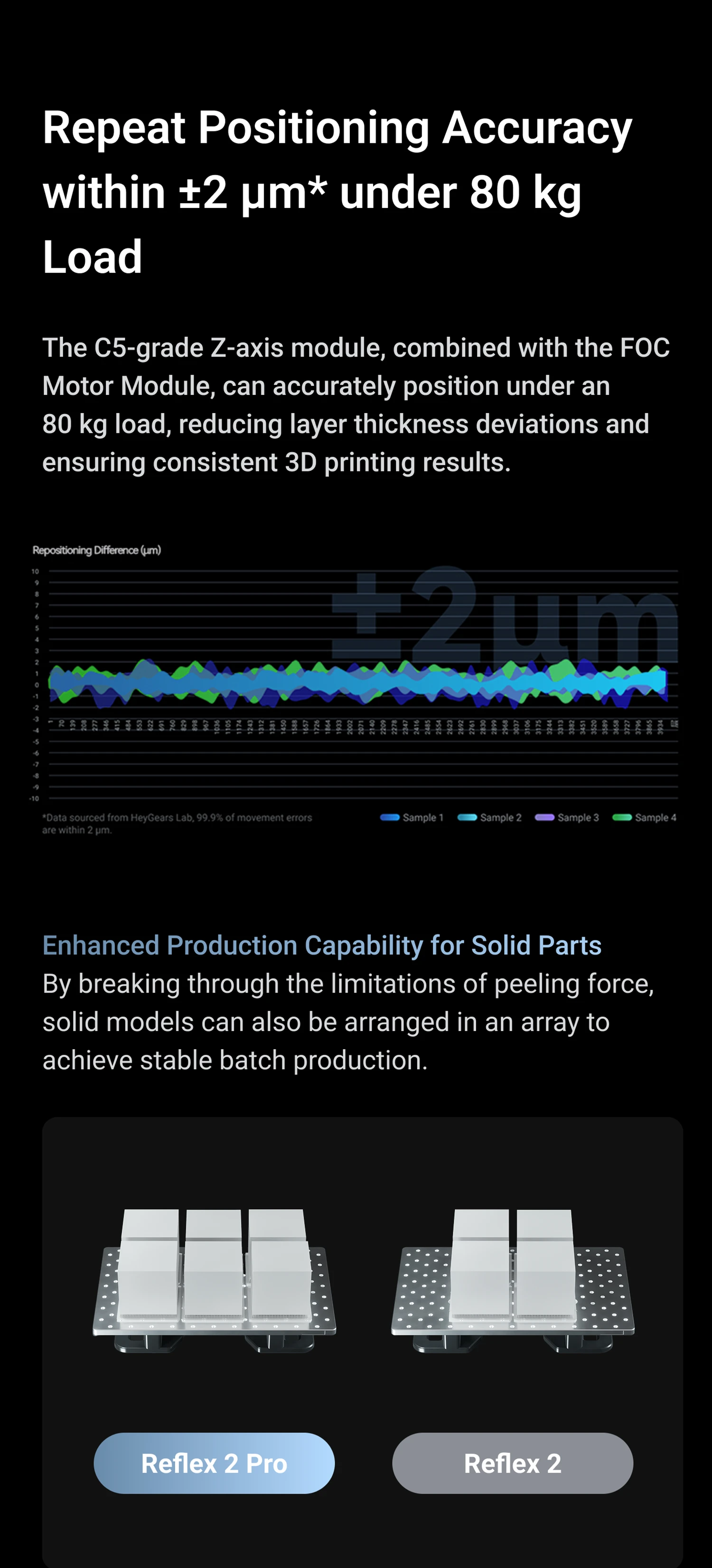
The C5-grade Z-axis module, combined with the FOC Motor Module, can accurately position under an 80kg load, reducing layer thickness deviations and ensuring consistent 3D printing results.
*Data sourced from HeyGears Lab, 99.9% of movement errors are within 2 μm.
Enhanced Production Capability for Solid Parts
By breaking through the limitations of peeling force, solid models can also be arranged in an array to achieve stable batch production.
Compared to traditional stepper motors, the FOC Motor Module can achieve stable printing at high speeds, with 99.6% of layer thickness errors within ±2 μm*.
*Data sourced from HeyGears Lab.
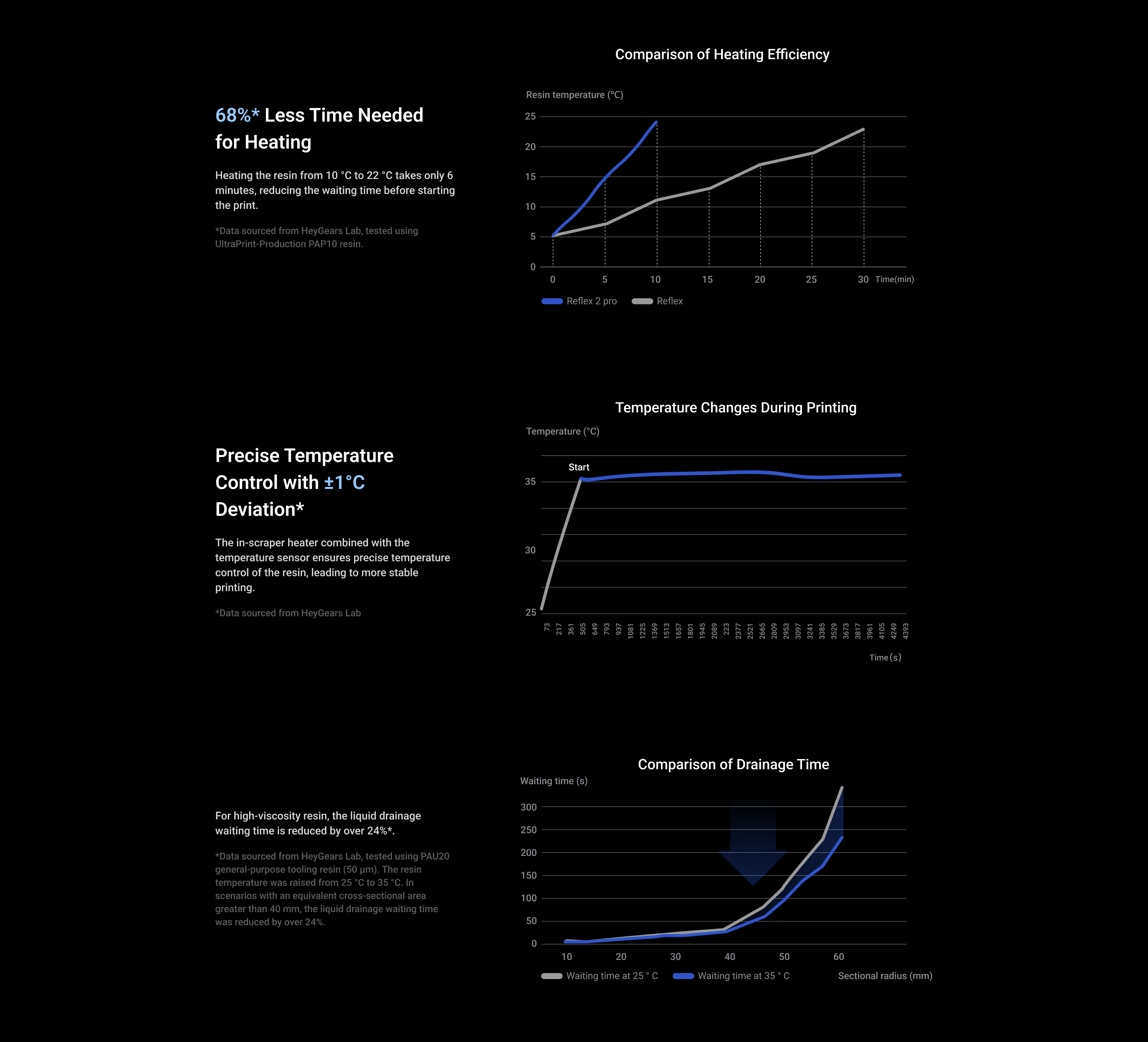
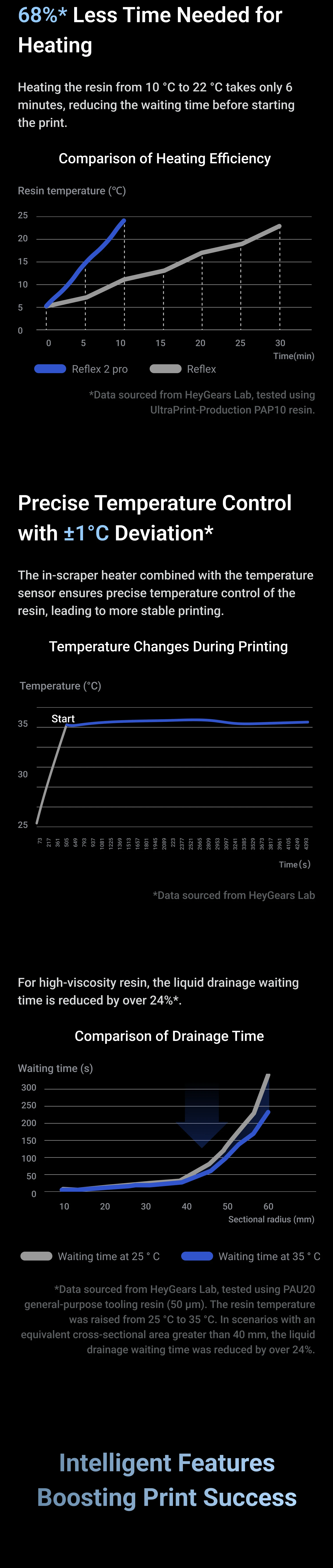
The Reflex 2 Pro features a smart scraper-assisted temperature control system which heats the resin more efficiently, keeping it at optimal printing temperature during the whole printing process and prevents resin sedimentation and residue at the same time.
The in-scraper heater combined with the temperature sensor ensures precise temperature control of the resin, leading to more stable printing.
*Data sourced from HeyGears Lab.
The in-scraper heater combined with the temperature sensor ensures precise temperature control of the resin, leading to more stable printing.
*Data sourced from HeyGears Lab.
For high-viscosity resin, the liquid drainage waiting time is reduced by over 24%*.
reflex2Pro.sections.temperatureControl.features.feature2.additional.description
The high-precision ultrasonic sensor measures its distance to the liquid surface, dynamically calculating liquid level height within ±0.5 mm accuracy. This enables precise assessment of resin supply for printing, triggering automatic resin refill and reducing the need for manual intervention.
Force sensors with a sensitivity of 0.01 N can detect resin residue as small as 0.15 mm and can auto-stop upon detection or print failure.
A floating build platform system with a deviation of 0.15° eliminates gaps of up to 240 µm for automatic leveling.
The die-casted single-piece body replaces multiple components, eliminating cumulative tolerances and enhancing device consistency. It also increases overall device rigidity and improves Z-axis repeat positioning accuracy.
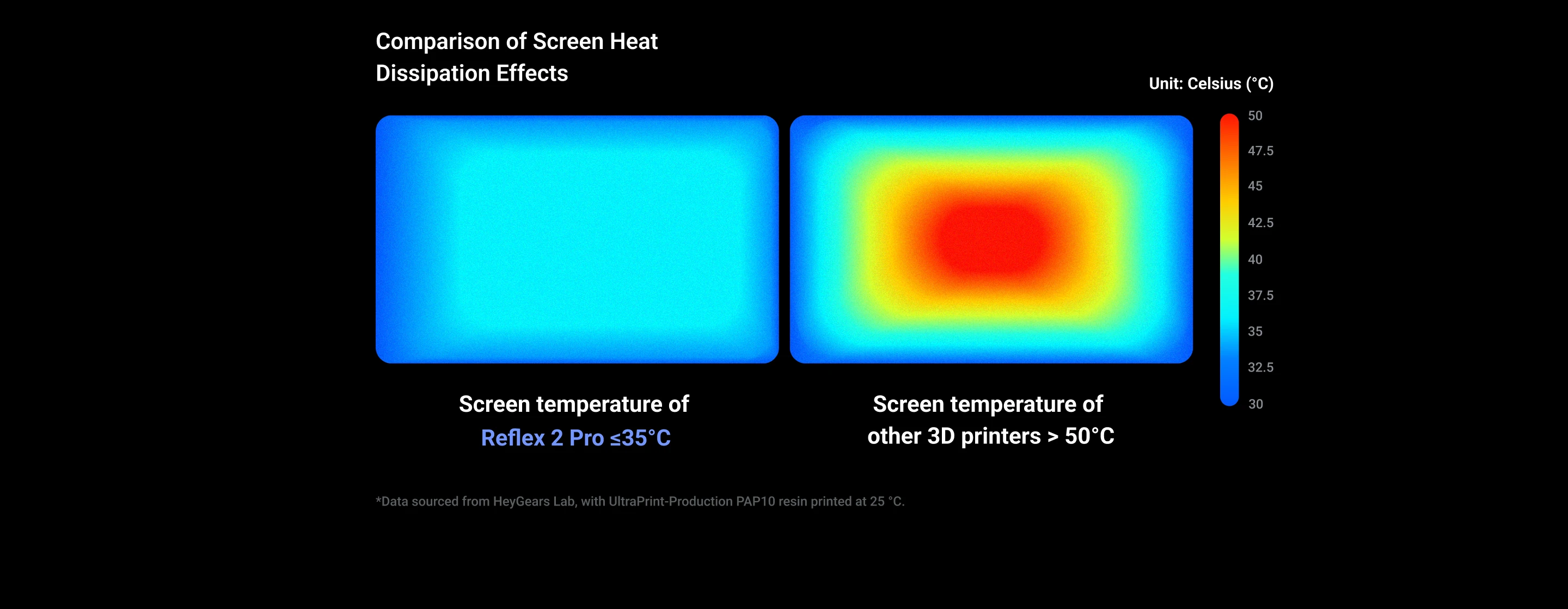
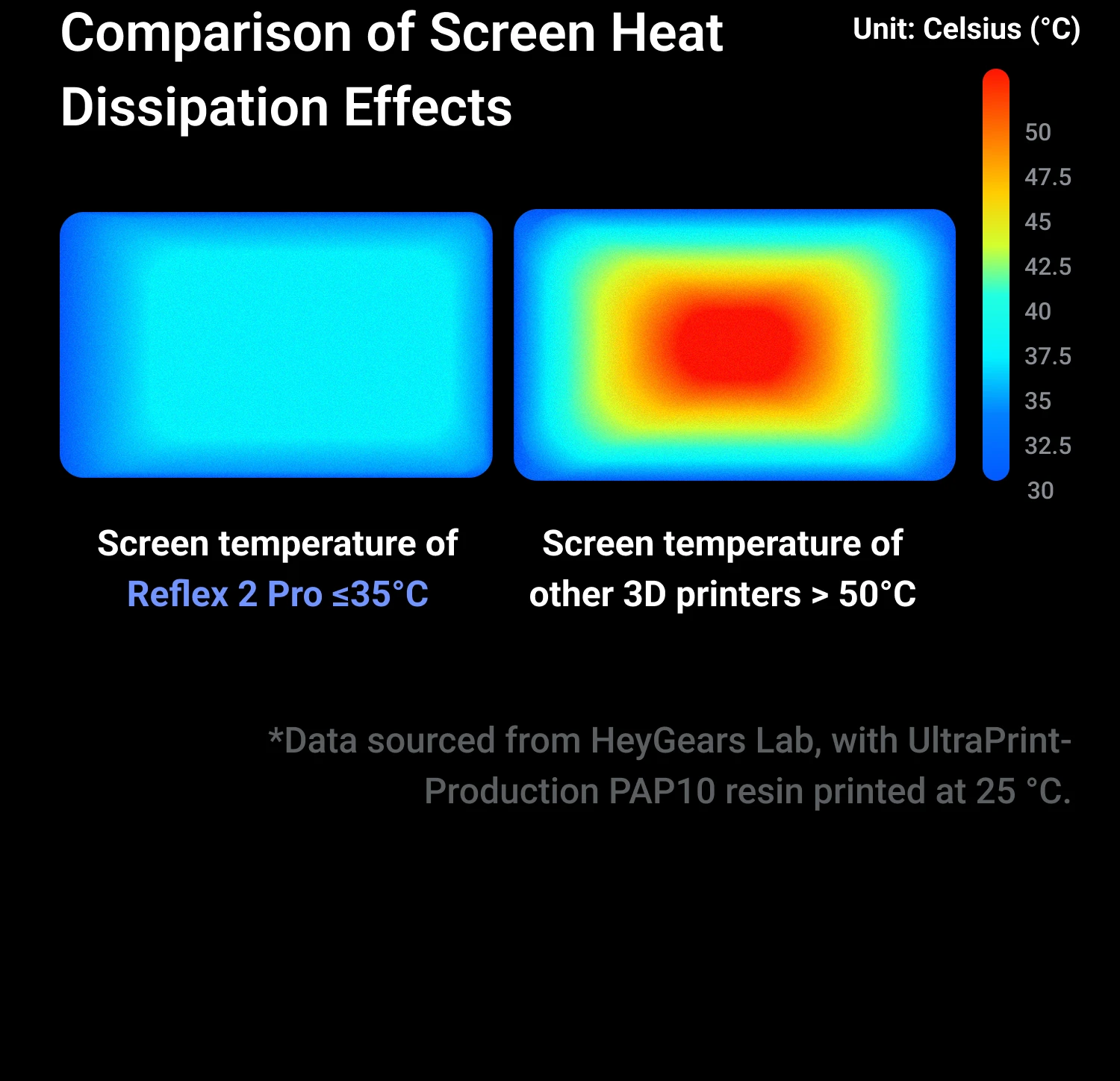
The thermal ventilation structure dissipates heat from the light source and screen, maintaining a stable temperature between 31.2 °C and 35 °C. This reduces heat buildup and extends lifespan.
*Data sourced from HeyGears Lab, with UltraPrint-Production PAP10 resin printed at 25 °C.
