- STOREGlobal/English


Global/English
From Design Sketch to 3D Printed Shoe in as Little as 3 Days
22/05/26 Chaozhou, China
As 3D printing enters footwear production, both designers and factory owners are finding new possibilities: faster creative validation, lighter production starts, and a more flexible path from concept to market.
When 3D printing becomes part of footwear production, designers and factory owners begin to see what is newly possible.
In the past, a shoe often began with a designer’s sketch. But whether that idea could truly reach the customer’s feet was not determined by design alone. For designers, the challenge was whether distinctive structures, shapes, and forms of expression could actually be made. For factory owners, the challenge was different: before orders were stable, could production begin in a lighter, lower-risk way? And once demand suddenly took off, could capacity keep up?
One side cares about whether creativity can be seen. The other cares about whether the business can run steadily. The value of 3D printed footwear lies in connecting these two needs.
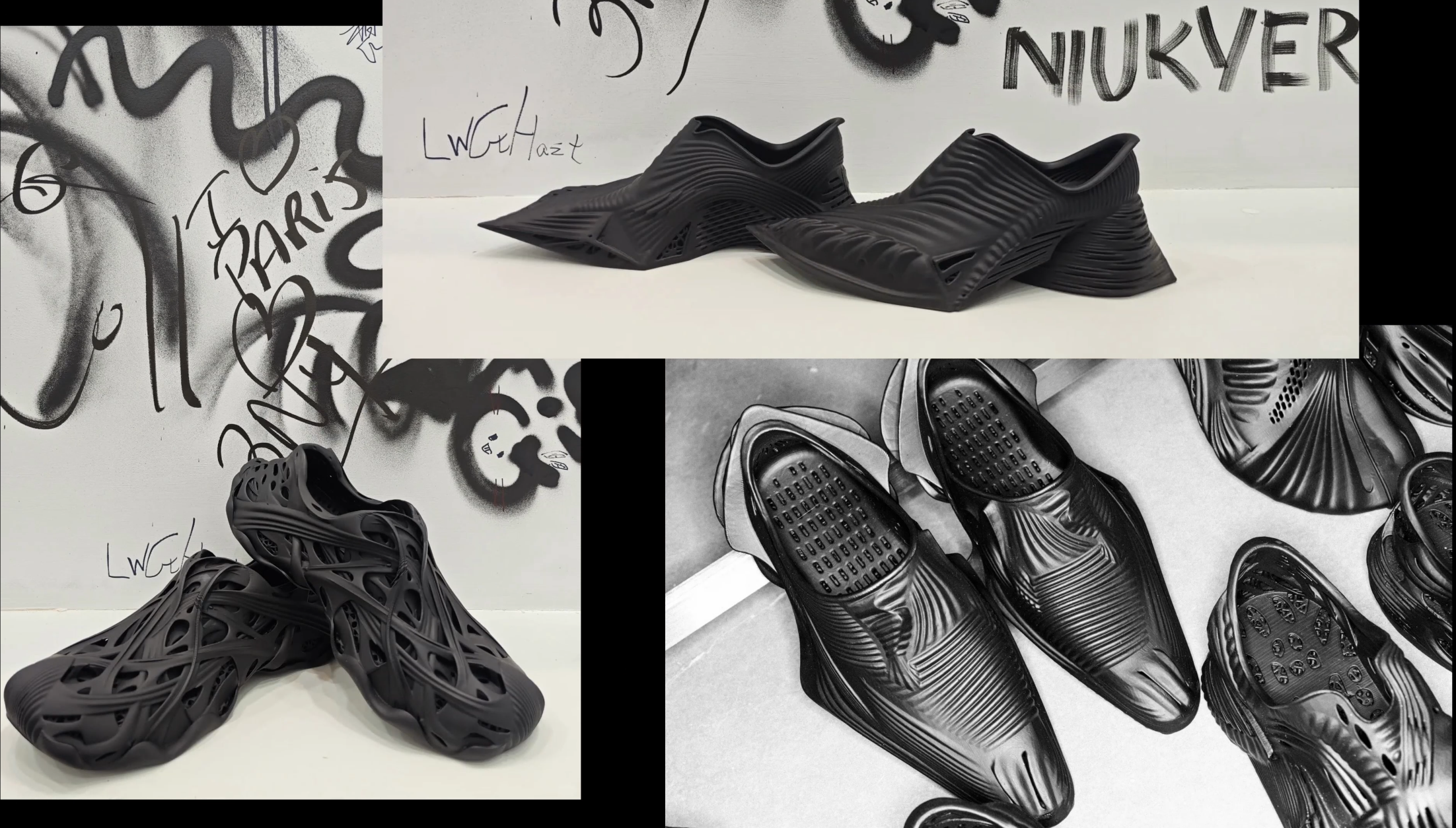
Kang Niu, Footwear Designer and Founder of Inely Tech, shares his experience utilizing the HeyGears Reflex 2 Pro, elastomer materials and a full 3D printing workflow to achieve his vision:
For Designers: Turning Every Idea into a Real Shoe That Can Be Worn Over Time
Q: Why use 3D printing to make shoes?
For designers, every design comes from somewhere. It comes from observing how people move, and from the designer’s own feelings and reflections on the world and everyday life. Shoes are a uniquely intimate product. They are not merely viewed; they are worn, used, and brought into real life.
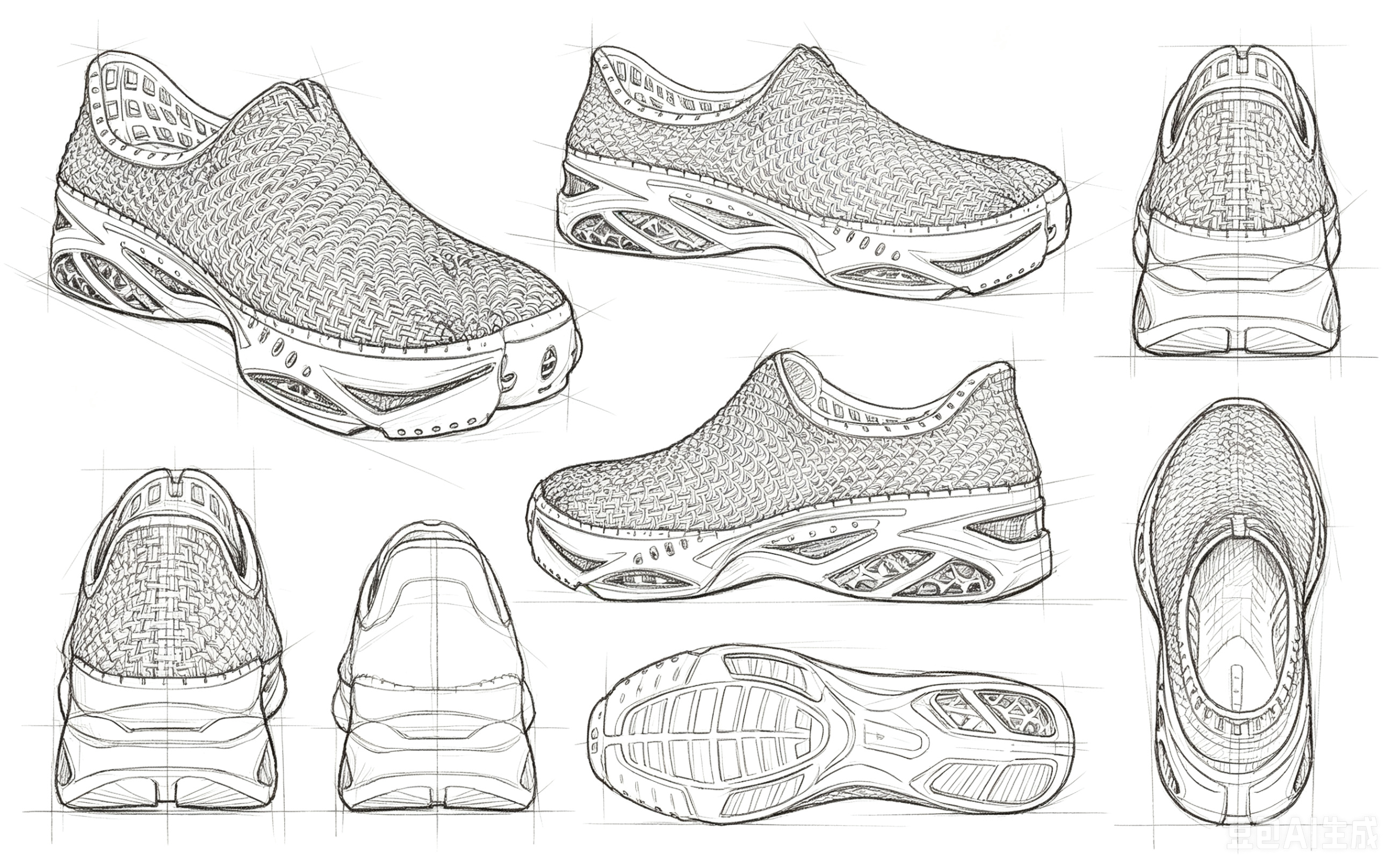
In the past, traditional manufacturing placed many limits on footwear design. Some structures worked visually but were difficult to achieve with conventional molds. Some forms were highly recognizable, but once they entered production, they had to be adjusted because of cost or lead time. Designers often did not lack ideas. Many ideas were stopped before they even began by one question: “Can this be produced?” So when a design moves from a drawing into a shoe that can actually be worn, through 3D printing, the result is powerful.
The biggest change brought by 3D printing is greater freedom in structure and form. It allows complex, non-standard, and strongly expressive designs to become physical products more directly. For designers, this is not only a gain in efficiency. It is the opening of creative space.
Q: What is the biggest change 3D printing brings to the design workflow?
It makes the process faster and freer. Previously, moving from design sketch to sample involved a great deal of communication and waiting. One revision could trigger another full round of sampling. Now, a printed sample can be reviewed in two to three days. This means designers can quickly judge whether the proportions are right, whether the structure is stable, and whether the shoe feels as imagined once it is worn. If something does not work, the design can be adjusted, printed again, and validated quickly.
The design process shifts from “waiting for the result” to rapid iteration toward the ideal state. And this freedom is not only about time. In the past, designers had to think through many production constraints in advance. Now, they can first express the idea more completely, then use 3D printing to verify whether it works. This makes design bolder and closer to its original intent.
For Footwear Factories: Building a Business That Can Actually Move
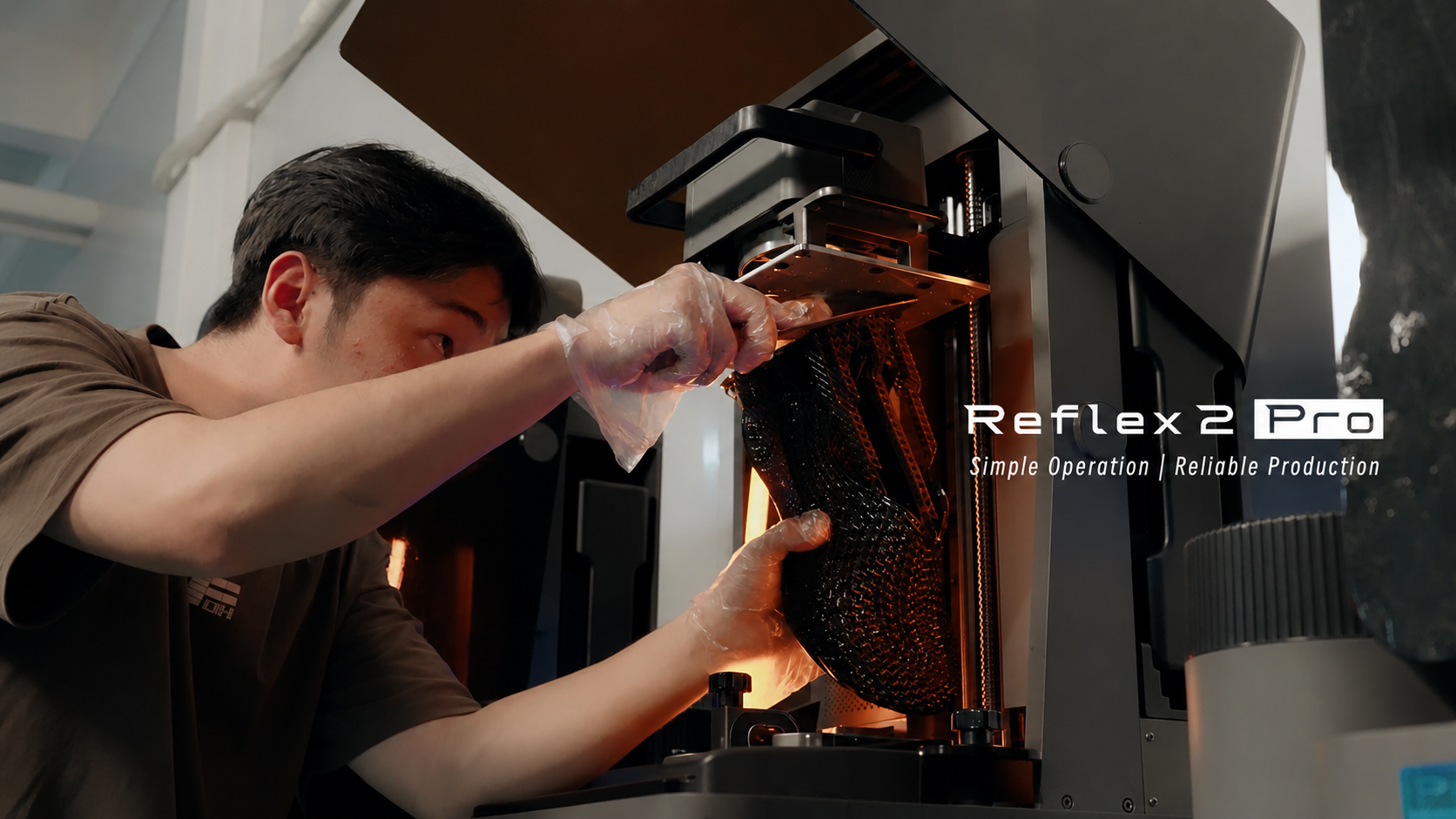
Q: From a factory’s perspective, what is the most direct value of 3D printed footwear?
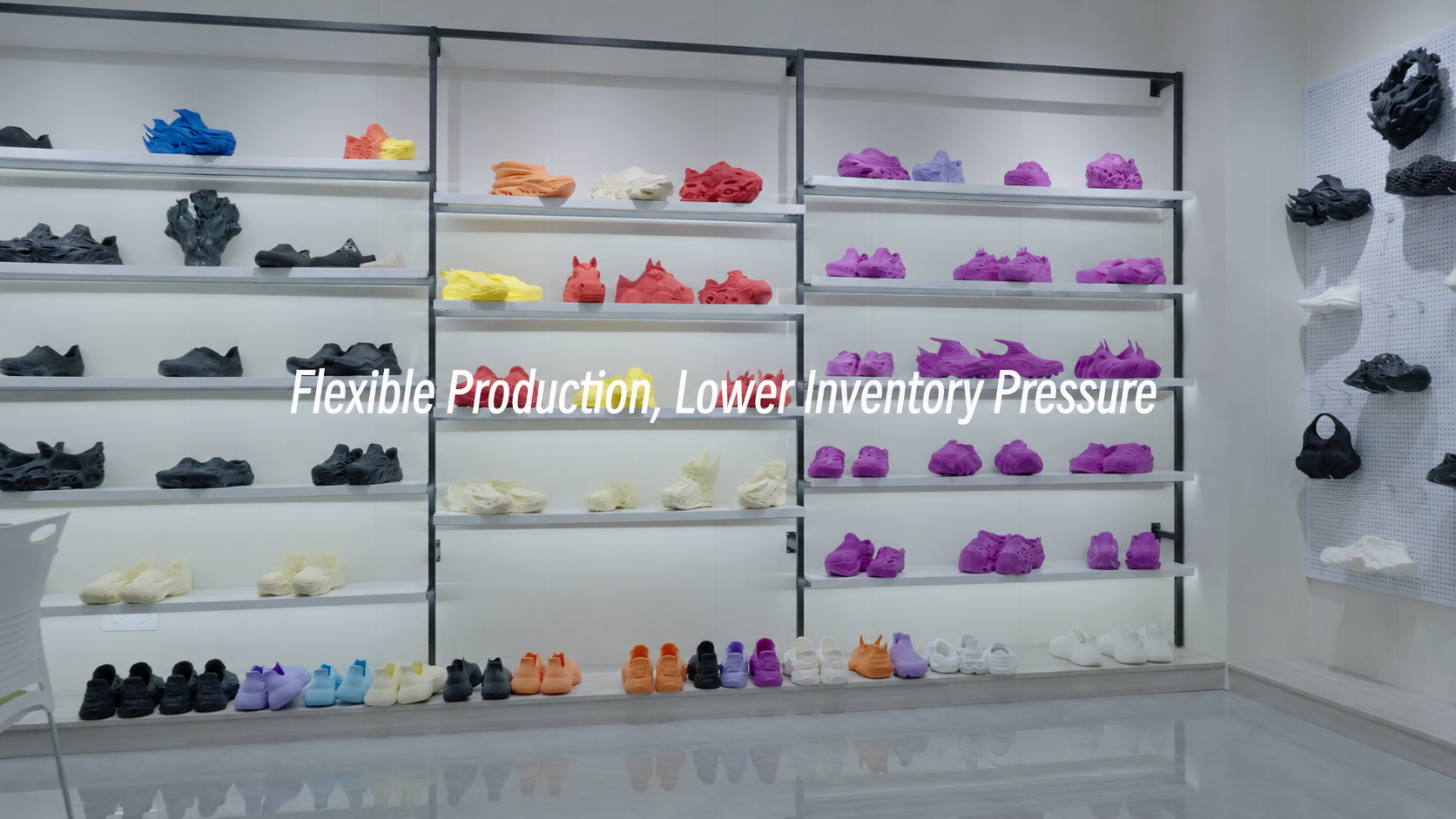
For us, the most direct value is flexibility. Footwear production does not end with making a single sample. Once it enters a commercial setting, factories must think about orders, cost, delivery, and capacity. In the past, much of footwear production depended on mold making and minimum order quantities. This model works for mature styles and large orders, but it carries high risk for new products. When a new product first launches, market feedback is still uncertain. If a factory commits to large-scale production from the start, inventory risk becomes heavy. But if the brand only wants a small test run, traditional supply chains may not be willing to take it on.
3D printing gives factories another production rhythm. When launching a new product, a factory can first run a small trial order to help the brand quickly validate the market. Once orders begin to move, the factory can continue replenishing. If demand surges, capacity can be matched by adding equipment and adjusting production scheduling. It is not only for prototyping. It allows production to change with each stage of the order cycle. For factories, that is a critical capability.
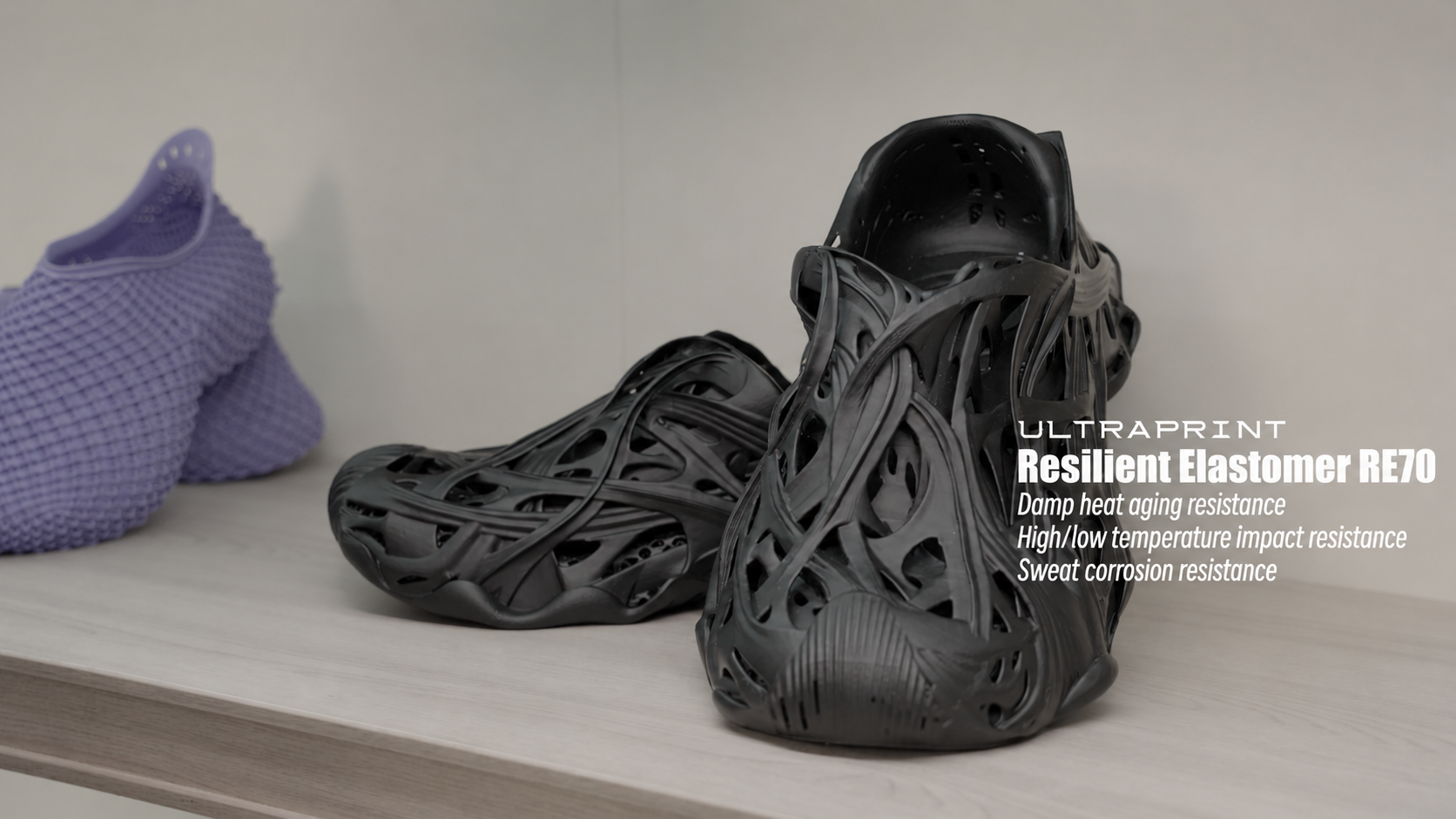
Q: Why is this model well suited to "small but strong" footwear businesses?
Because "small but strong" does not mean playing small. What it really needs is a lighter way to start and a more flexible path to growth. A brand can begin with one design and a small batch of orders. It does not have to compromise its judgment just to meet minimum order quantities, nor does it need to build up heavy inventory in advance just to control unit cost. If market feedback is positive, production can then expand step by step.
In this way, production is no longer a heavy prerequisite. It becomes a capability that can grow together with the business. In the past, many footwear businesses needed sufficiently large orders before production could even begin. Now, they can start with smaller trial orders, faster feedback, and lighter investment. This gives many creative projects that were once difficult to launch a real path to market.
The HeyGears Solution: Lighter Production Starts with More Control in Every Process Detail
Q: How do HeyGears' complete 3D printing solutions and self-developed materials help factories in practical terms?
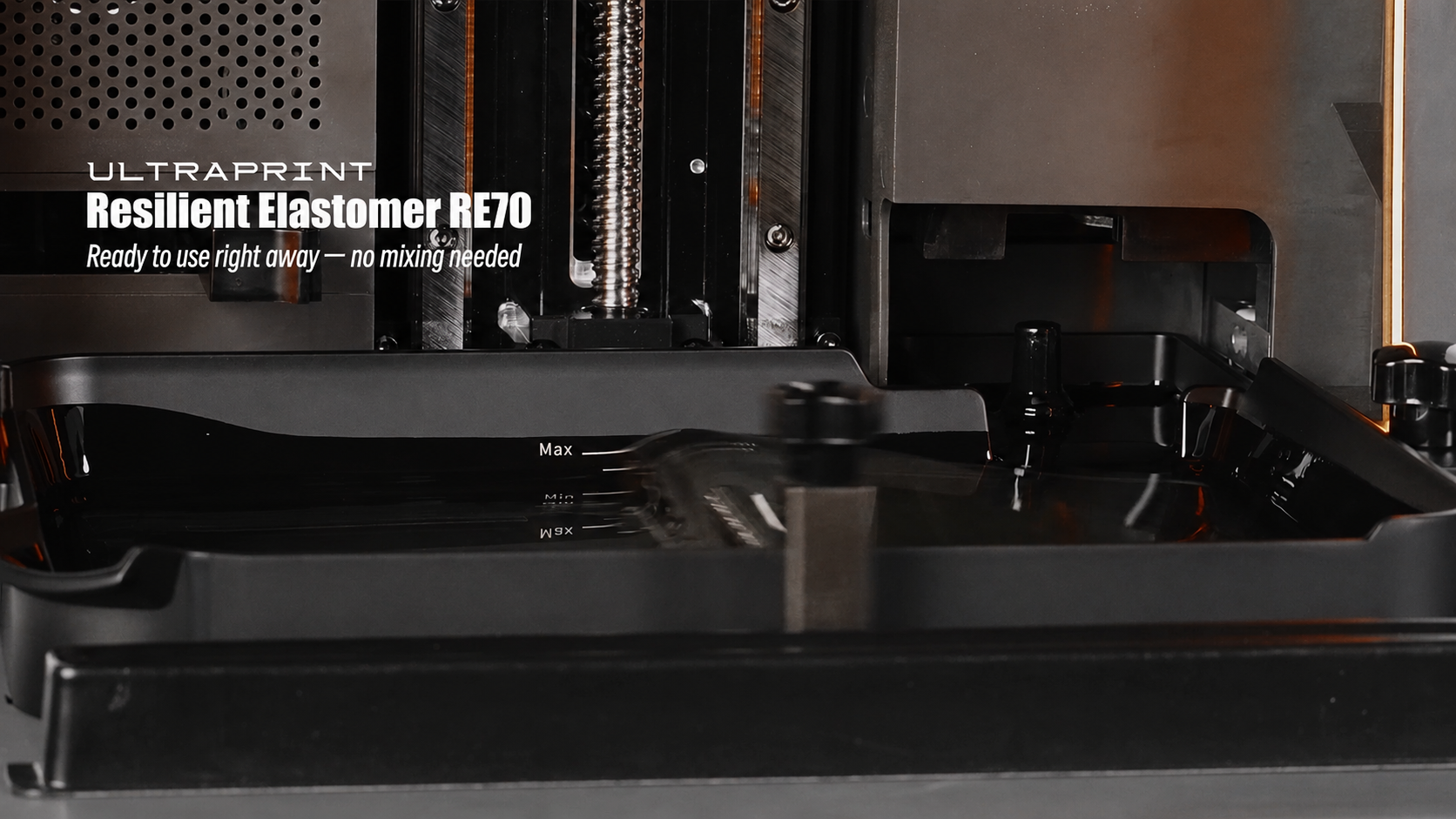
For factories, convenience is critical. Real production is not a single successful test in a lab. It is about producing steadily and delivering consistently every day. The HeyGears footwear solution uses single-component material printing. It does not require complex mixing, nor does it require additional heat treatment. Once opened, the material can go directly into the production workflow. This first lowers the operating threshold. Employees do not need to spend too much time learning material ratios and mixing procedures, which makes day-to-day training and management simpler. When one step is removed from the process, there is also one less opportunity for error.
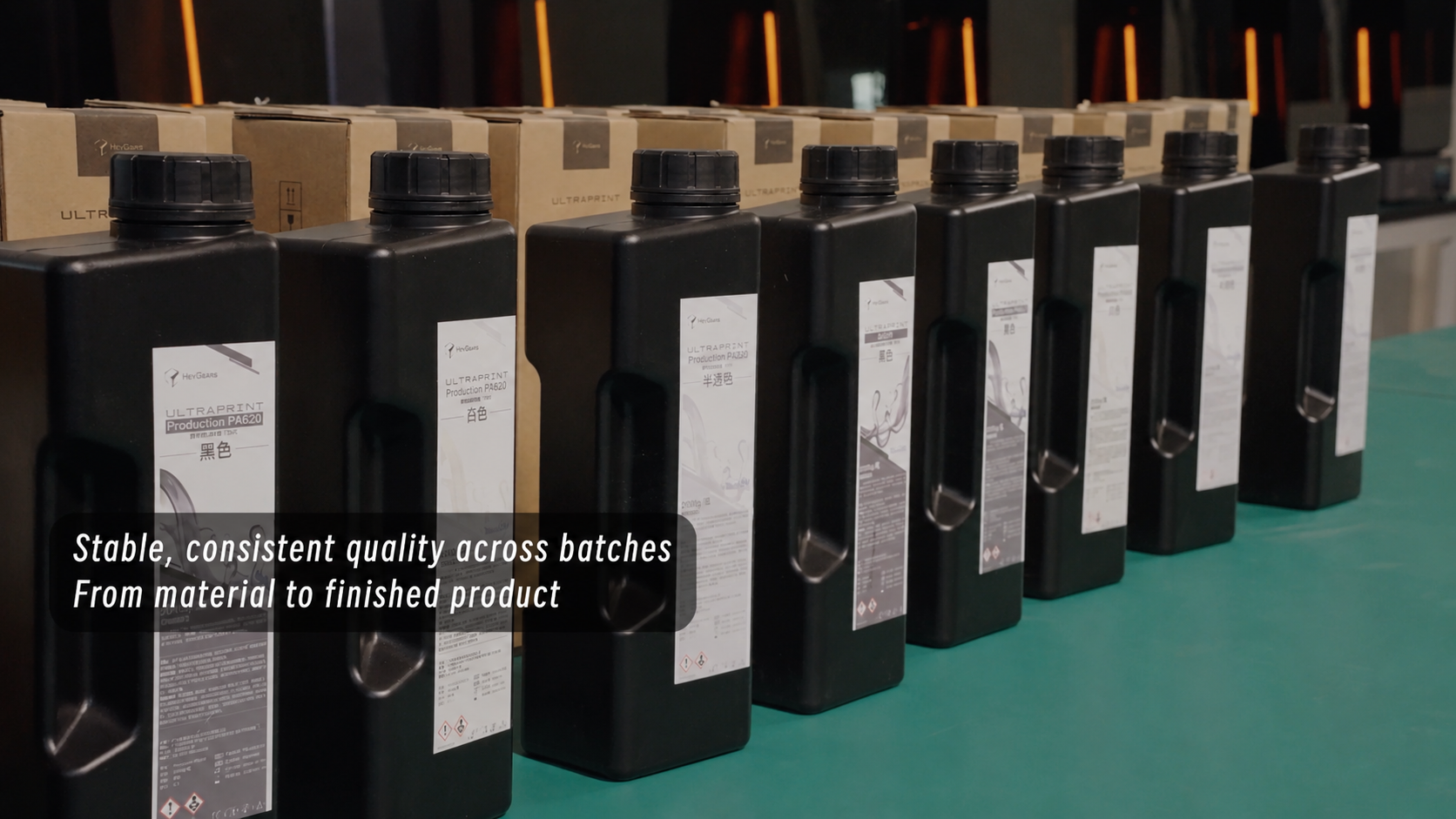
For factories, standardization matters. If a process depends too heavily on experience, it is difficult to replicate. If a material is too complicated to handle, management costs rise. If one step is prone to errors, batch stability is affected. Single-component materials make the production workflow more direct. Combined with HeyGears equipment technology and quality control in material production, factories can more easily turn this production method into a standardized operating procedure.
Q: What value does longer usability of materials bring to factories?
It directly affects production rhythm and cost control. Factories do not want to be pushed around by materials. If a material must be used quickly after opening, any change in order rhythm can put the factory in a passive position. Sometimes production is not needed immediately, but the material is nearing its usable limit, so the factory is forced to schedule printing. This disrupts the original production plan and creates hidden waste.
HeyGears materials have a longer usable life after opening. Even if printing is paused temporarily, factories do not need to worry about material loss. This is highly practical for production management. When orders are available, factories can produce according to plan. When orders pause, they are not forced to keep producing simply to consume material. The production rhythm can follow business needs, rather than the material’s lifespan. The result is better cost control and more stable management.
Q: How do these advantages ultimately affect factory operations?
They make production more controllable. Equipment, materials, and workflow all ultimately come back to factory operations. Are employees easy to train? Is production easy to schedule? Are materials easy to manage? Are batches stable? Are costs predictable? These may look like details, but details determine whether a production line can run steadily over the long term.
The value of the HeyGears solution is not only that it makes shoes printable. More importantly, it makes printed footwear closer to a manageable, repeatable, and sustainable production model. That is exactly what 3D printing must solve in order to truly enter footwear production.
When Creativity and Production Both Have a Lighter Path
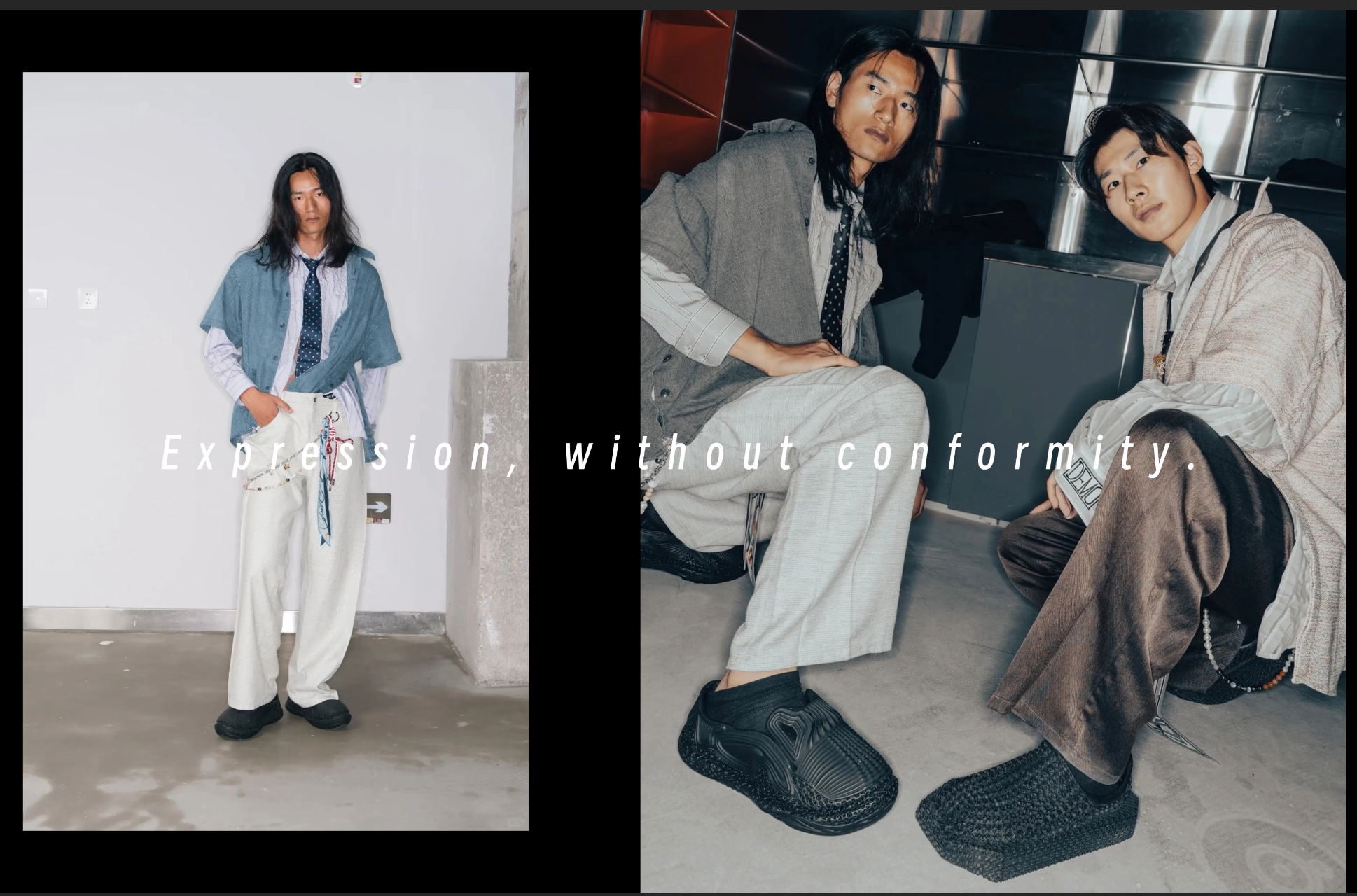
Designers want distinctive ideas to be made, worn, and seen by more people. Factory owners want production to be more flexible, costs to be more controllable, and capacity to be ready when orders arrive while still being adjustable when the market changes. In the past, these two needs were often separated by traditional production processes. Design had to compromise for manufacturing. Production had to give way to scale. 3D printed footwear is now offering a new way to connect the two. It allows designers to express ideas more freely and bring creativity into the real world faster. It also allows factories to arrange capacity across different stages, from small trial orders to batch production.
A shoe does not always need to begin with a large order. It can begin with a design sketch, one print, and one round of real feedback. When production is no longer a barrier for creativity, more designs have the chance to truly reach people’s feet. And when factories have a more flexible production method, small but strong footwear businesses gain a real chance to get moving.
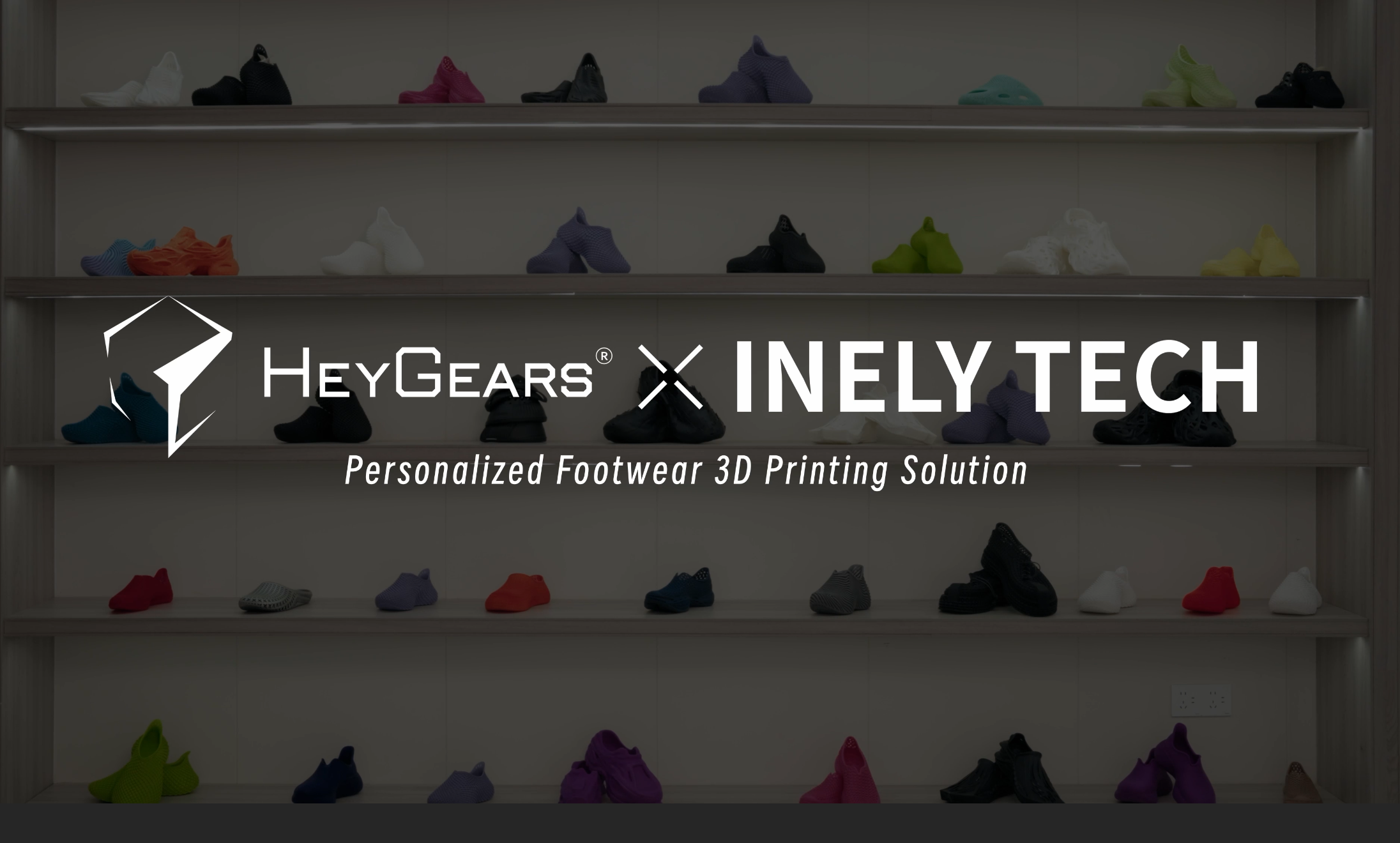
Want to learn more about HeyGears 3D printing production solutions for 3D printed footwear and fashion? Register your interest here or contact sales@heygears.com for more info.
